
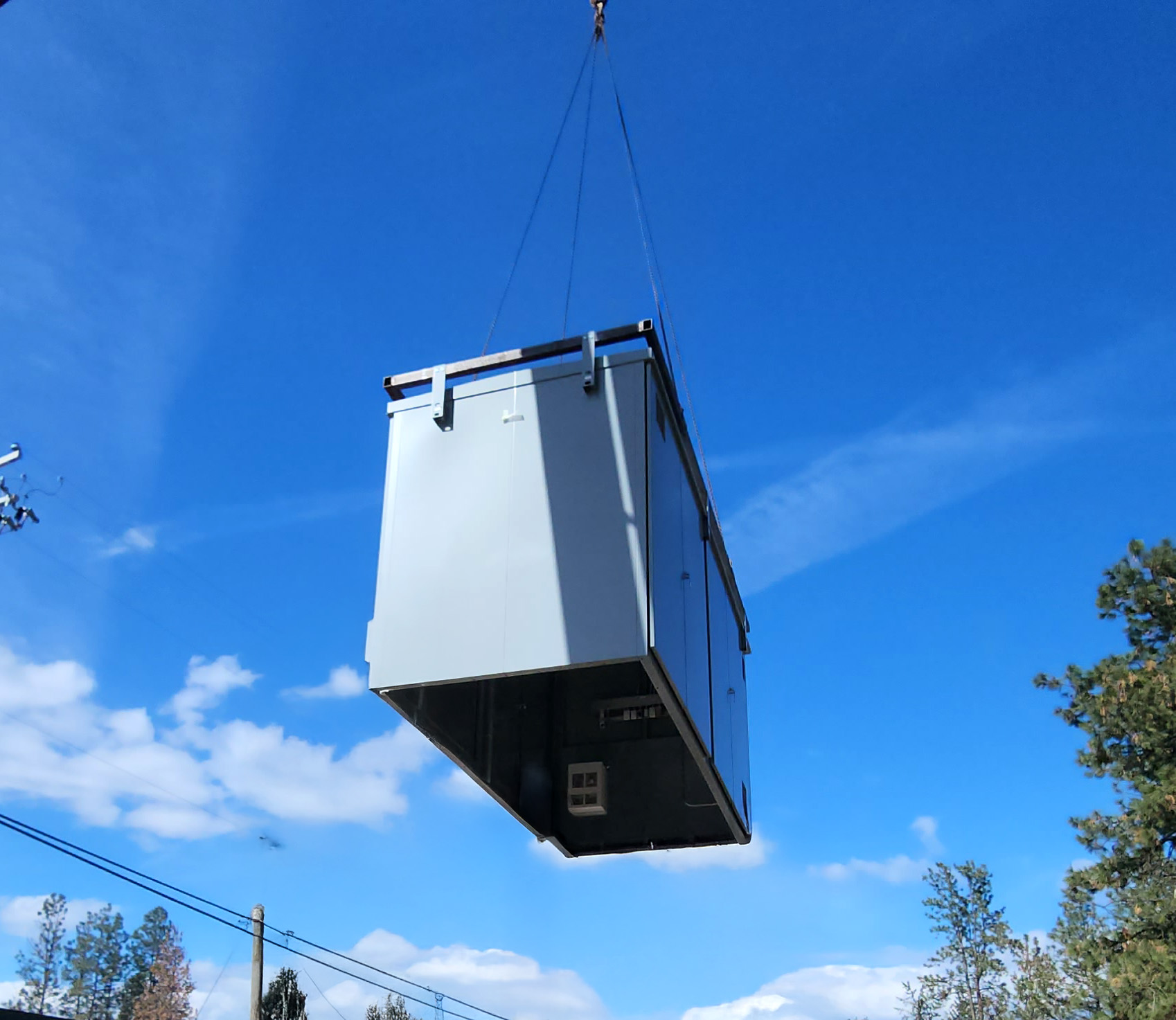
When designing electrical kiosks and enclosures, material selection plays a critical role in determining performance, longevity, installation costs, and overall customer satisfaction. While steel has traditionally been a common material in industrial applications, aluminum continues to gain popularity across industries for its unique combination of strength, durability, corrosion resistance, and weight savings.
For manufacturers and end users alike, choosing aluminum over steel can deliver significant advantages throughout the entire lifecycle of an enclosure—from fabrication and transportation to installation and decades of service in the field. Here’s why aluminum has become the preferred material for many modern electrical kiosks and enclosures.
Lightweight Without Compromising Performance
One of aluminum’s most well-known advantages is its weight. Aluminum weighs approximately one-third as much as steel, making it significantly easier to handle during manufacturing, shipping, and installation.
For electrical kiosks and enclosures, this reduction in weight creates several practical benefits:
- Easier transportation and reduced freight costs
- Simplified installation processes
- Less strain on mounting structures and foundations
- Improved workplace safety during handling
- Reduced lifting equipment requirements
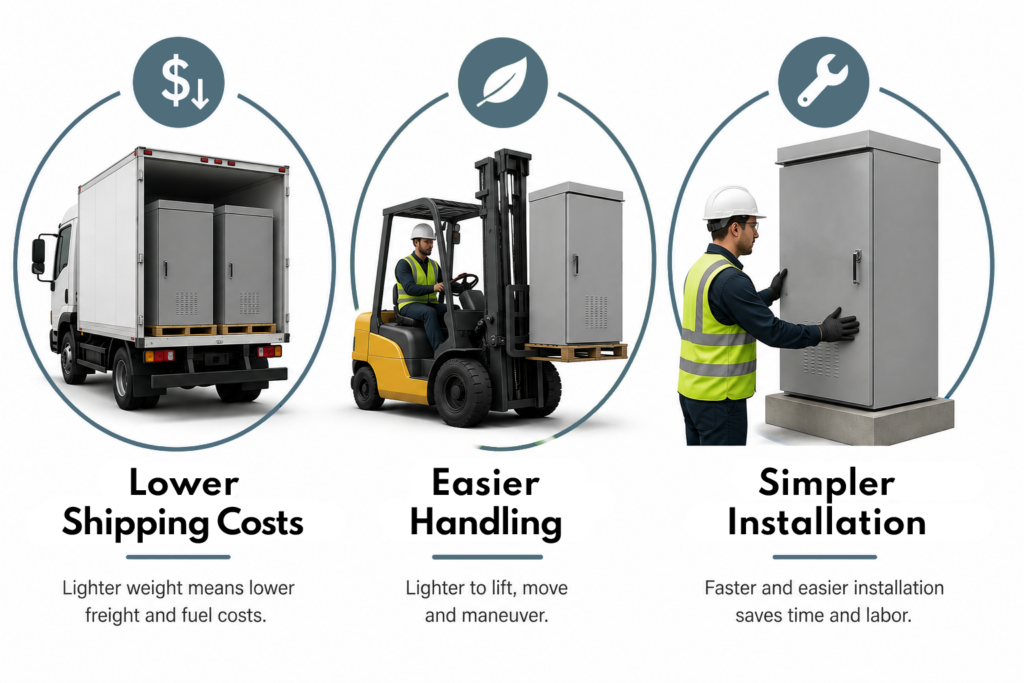
A lighter enclosure can also provide flexibility in applications where weight limitations are a concern, such as rooftop installations, remote infrastructure projects, or equipment mounted on trailers and vehicles.
For manufacturers, lighter materials can improve production efficiency by making parts easier to move through fabrication and assembly processes. For customers, lighter products often translate into faster installations and lower overall project costs.
Superior Corrosion Resistance
One of the most significant challenges facing outdoor electrical equipment is corrosion. Exposure to rain, humidity, snow, road salt, coastal environments, and industrial pollutants can quickly degrade materials that are not adequately protected.
Unlike steel, aluminum naturally forms a thin oxide layer when exposed to air. This oxide layer acts as a protective barrier that helps prevent further corrosion and deterioration.
Steel typically requires protective coatings such as paint, galvanization, or powder coating to prevent rust. While these coatings can be effective, damage from scratches, impacts, or wear can expose the underlying steel, allowing rust to develop and spread over time.
Aluminum’s natural corrosion resistance provides several advantages:
- Longer service life in outdoor environments
- Reduced maintenance requirements
- Improved appearance over time
- Better performance in coastal and high-humidity regions
- Increased reliability for critical electrical infrastructure
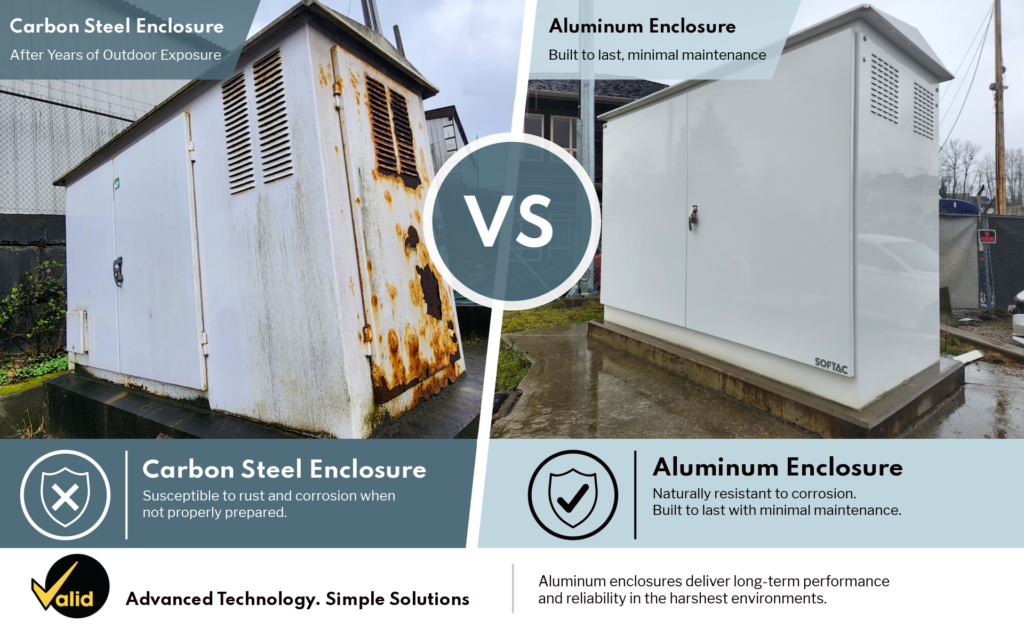
For electrical kiosks and enclosures that may be expected to operate for decades, corrosion resistance becomes a major factor in reducing lifecycle costs and protecting valuable electrical equipment.
Excellent Strength-to-Weight Ratio
A common misconception is that steel is always stronger than aluminum. While steel generally has higher absolute tensile strength, aluminum offers an outstanding strength-to-weight ratio.
This means aluminum can provide the structural integrity needed for many enclosure applications while significantly reducing overall weight.
Modern aluminum alloys are engineered to deliver impressive mechanical performance and can withstand:
- Heavy environmental loads
- Wind exposure
- Vibration
- Impact forces
- Everyday operational demands
When properly designed, aluminum electrical enclosures can provide exceptional durability without the weight penalties associated with steel.
For infrastructure projects, utilities, telecommunications systems, renewable energy installations, and industrial applications, aluminum delivers a balance of strength and efficiency that is difficult to match.
Lower Lifetime Maintenance Costs
When evaluating enclosure materials, initial purchase price tells only part of the story. The true cost of ownership includes maintenance, repairs, replacements, and downtime throughout the product’s life.
Because aluminum resists corrosion naturally, it often requires significantly less maintenance than steel alternatives.
Benefits include:
- Fewer repainting requirements
- Reduced rust remediation
- Lower inspection costs
- Less frequent repairs
- Extended service life
For municipalities, utility providers, and industrial operators managing hundreds or even thousands of electrical enclosures, these savings can become substantial over time.
Reduced maintenance also means less disruption to operations and lower labor costs, improving the overall return on investment.
Improved Sustainability and Environmental Benefits
Sustainability is becoming an increasingly important consideration for manufacturers and customers alike.
Aluminum offers several environmental advantages:
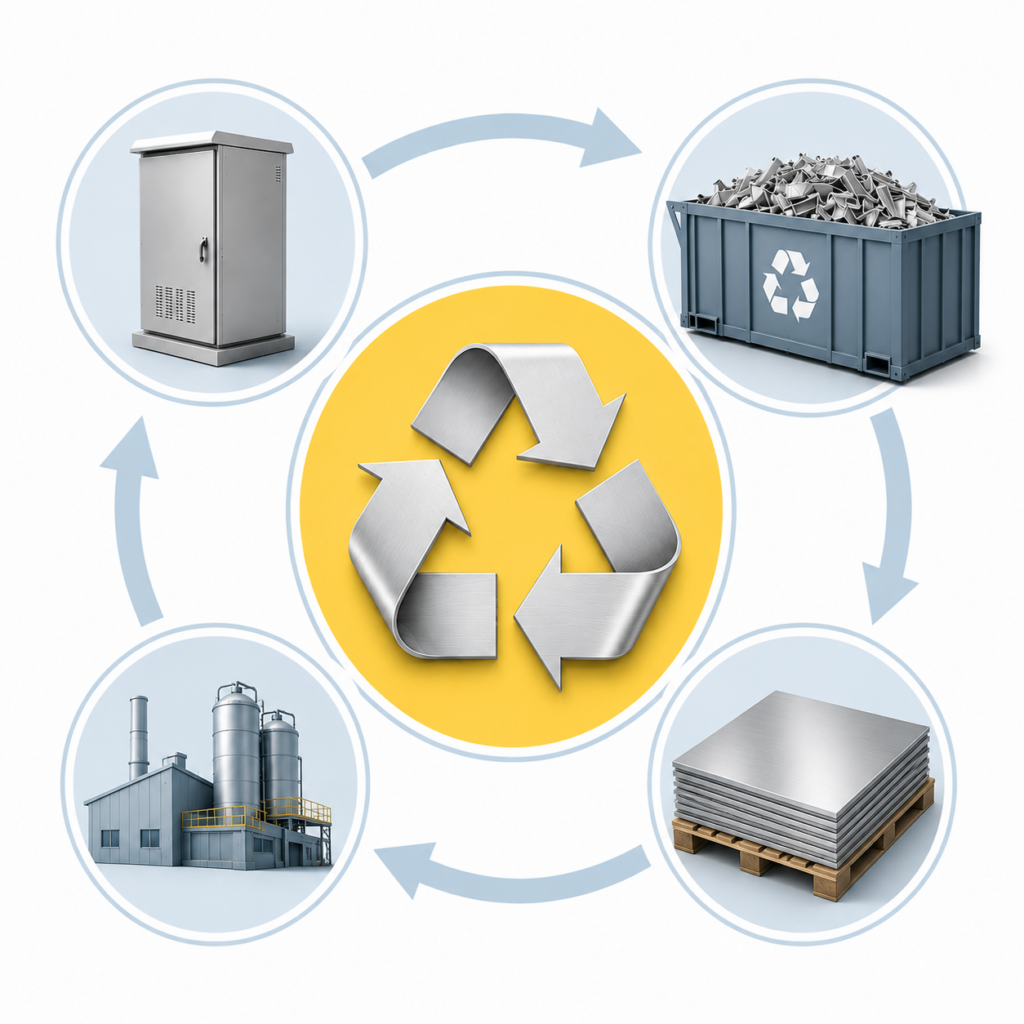
Highly Recyclable
Aluminum is one of the most recyclable materials in the world. It can be recycled repeatedly without losing its material properties or performance characteristics.
In fact, a significant portion of aluminum in use today has already been recycled multiple times.
Lower Transportation Emissions
Because aluminum is substantially lighter than steel, transportation requires less fuel and generates fewer emissions.
Whether shipping raw materials to a manufacturing facility or delivering completed kiosks to customers, weight reduction contributes to lower environmental impact.
Long Product Life
The durability and corrosion resistance of aluminum help extend product life, reducing the frequency of replacement and minimizing material waste.
For organizations pursuing sustainability initiatives or environmental certifications, aluminum can help support long-term goals while maintaining high performance standards.
“A recent observation that stood out to me occurred while revisiting a municipal lift station that I had designed more than 10 years earlier. The station required a significant pump and resulting motor starter upgrade, and it was immediately apparent from the generator enclosure that the facility had been in service for over a decade. In contrast, Valid’s marine-grade aluminum electrical kiosk remained in excellent condition. Rather than replacing the enclosure, we recommended retrofitting only the interior electrical panels. The difference in appearance between the two enclosures was striking, and in municipal infrastructure, optics matter. Asset owners appreciate infrastructure that continues to look as well maintained as it performs. Based on our experience, Valid’s aluminum enclosures have proven to be a durable, high-quality solution that stands up well in the demanding coastal environments we work in.” IRVIN NAIDU P.ENG., Associate, Senior Design Engineer, Regional Municipal Utilities Lead, PBX Engineering Ltd.
Better Thermal Performance
Electrical equipment generates heat, and proper thermal management is critical to maintaining system reliability.
Aluminum offers excellent thermal conductivity compared to steel, allowing it to transfer and dissipate heat more effectively.
Benefits include:
- Improved heat distribution
- Reduced hot spots
- Enhanced equipment protection
- Increased reliability of electrical components
In applications containing power distribution equipment, communications hardware, batteries, or control systems, better heat management can contribute to longer equipment life and improved operational performance.
Easier Fabrication and Manufacturing
Aluminum is a highly versatile material that lends itself well to modern manufacturing processes.
It can be:
- Laser cut
- CNC machined
- Bent and formed
- Welded
- Powder coated
- Finished to meet a variety of aesthetic and functional requirements
Its workability allows manufacturers to create complex enclosure designs while maintaining precision and quality.
The lighter weight of aluminum components can also improve ergonomics for production teams and reduce wear on handling equipment throughout the manufacturing process.
These efficiencies can lead to faster production timelines and more consistent product quality.
Enhanced Appearance Over Time
Electrical kiosks and enclosures are often installed in public spaces, commercial developments, utility corridors, and industrial facilities where appearance matters.
Rust stains, peeling paint, and visible corrosion can negatively impact the perception of infrastructure and increase maintenance concerns.
Because aluminum naturally resists corrosion, it maintains a cleaner appearance for longer periods.
Combined with high-quality finishing options such as powder coating, aluminum enclosures can maintain their professional appearance for years, even in harsh outdoor environments.
This is particularly valuable for municipalities, utility providers, and organizations seeking to present a clean and professional image to customers and stakeholders.
Ideal for Harsh Outdoor Environments
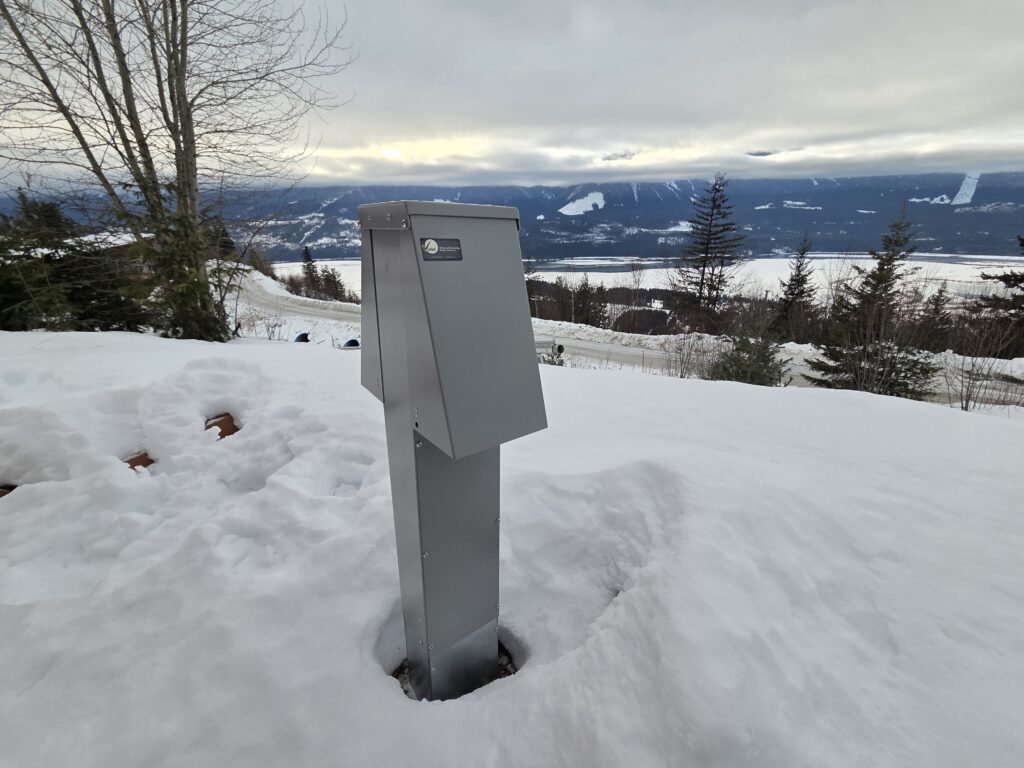
Many electrical kiosks and enclosures spend their entire service life outdoors. They face constant exposure to:
- Rain and snow
- UV radiation
- Temperature fluctuations
- Humidity
- Salt spray
- Industrial contaminants
These conditions can accelerate deterioration in steel products, especially if protective coatings become damaged.
Aluminum’s natural resistance to environmental degradation makes it exceptionally well suited for demanding outdoor applications.
Whether installed in coastal regions, remote utility sites, transportation infrastructure, renewable energy facilities, or urban environments, aluminum provides dependable long-term performance.
The Future of Electrical Enclosure Design
As industries continue to prioritize durability, efficiency, sustainability, and reduced maintenance costs, aluminum has emerged as a leading material for electrical kiosks and enclosures.
Its combination of lightweight construction, corrosion resistance, strength, thermal performance, and recyclability offers compelling advantages over traditional steel alternatives.
For manufacturers, aluminum supports efficient production and innovative product design. For customers, it delivers reliable protection for critical electrical equipment while reducing maintenance demands and extending service life.
When evaluating materials for electrical kiosks and enclosures, the question is no longer whether aluminum can compete with steel—it is whether steel can match the comprehensive benefits that aluminum provides.
By choosing aluminum, manufacturers and end users alike can invest in a solution designed to perform reliably for years to come, even in the most challenging environments.
“We’ve used Valid Manufacturing’s electrical kiosks and wall mount enclosures as a standard in our products for many years, thanks to their design quality, manufacturing, and finish. Their aluminum enclosures are our most common choice because they’re comparably priced, our staff find them easier to handle, and customers appreciate the installation ease and long-term durability. Wherever possible, we substitute steel for aluminum.” Colin Wierks | P.Eng. | CMSE®, Engineering Manager, SOFTAC Systems Ltd.
The Valid Approach
At Valid, we understand that every application has unique performance requirements, environmental challenges, and operational demands. That’s why material selection is never a one-size-fits-all decision.
While aluminum offers significant advantages for many electrical kiosks and enclosures, our engineering team carefully evaluates factors such as environmental exposure, structural requirements, installation conditions, and long-term maintenance expectations to determine the best solution for each project.
By combining decades of manufacturing expertise with a customer-focused approach, Valid ensures every enclosure is built using the right materials for the application—delivering the durability, reliability, and performance our customers depend on for years to come.